
How Many Porta Potties Does a County Fair Need?
Fair crowds are different from a job site. People arrive in waves, cluster around food vendors and stages, and all need a restroom in the same twenty-minute window. That means you plan for peak attendance, not average attendance, and you spread units across the grounds instead of stacking them at one entrance. Our how many porta potties do I need guide walks through the math, but the short version for a fair in Clifton is this: budget more units per head than you would for an office trailer or a construction crew, because bathroom trips cluster around intermissions and meal breaks.
Standard units run 100 to 350 dollars a day depending on order size and how long you need them on site, and a multi-day fair usually lands cheaper per day on a weekly rate than booking day by day. ADA Standards 213.2 requires that where single-user units are clustered, at least 5 percent be accessible, with a minimum of one, so a fair with twenty standard toilets needs at least one ADA unit in that group. We place those ADA accessible porta potties at the front of each cluster, on stable, level ground per ADA Standards 302.1, with a 60 inch turning circle in front per ADA Standards 304.3.1.
What Restroom Setup Works Best for a Fair Layout?
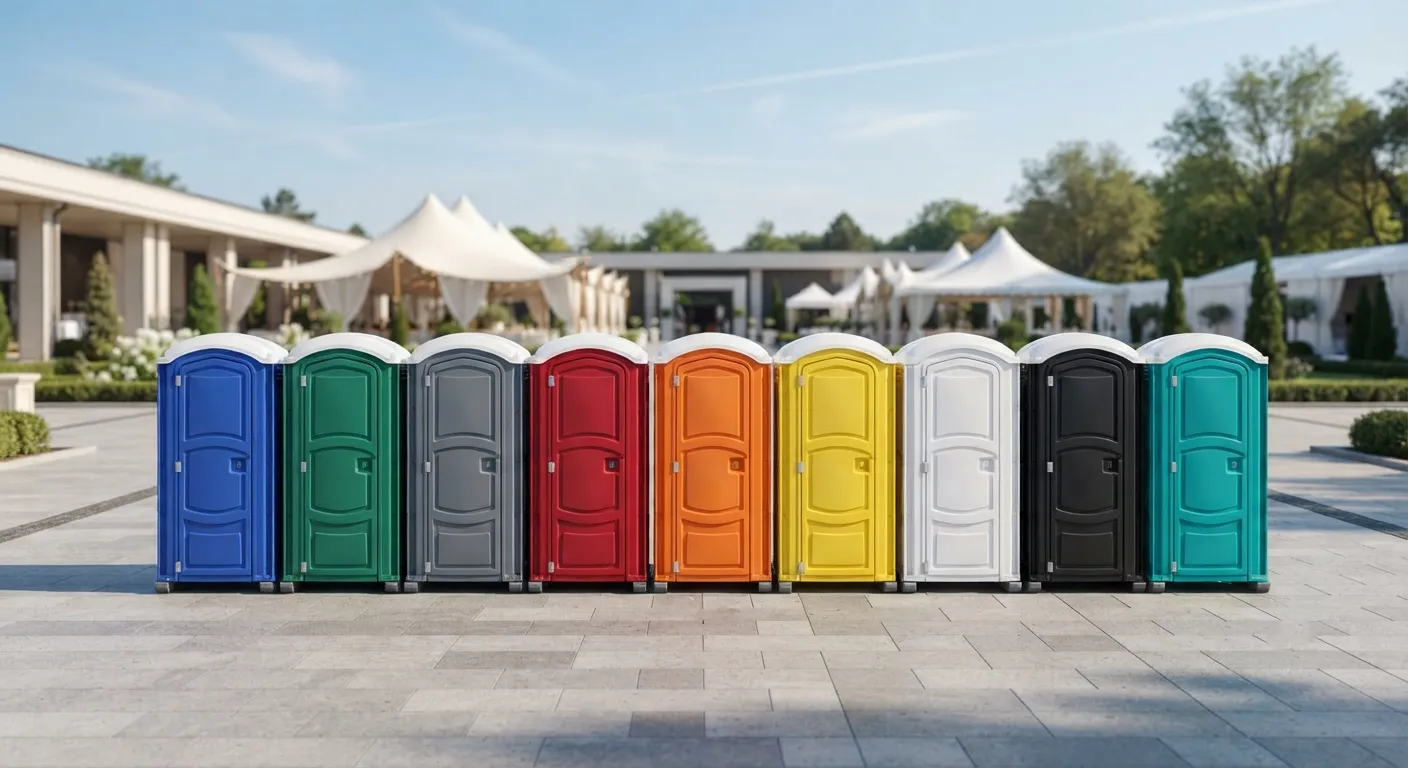
Fairs sprawl. You've got a midway, a grandstand, food row, and parking fields, and a single bathroom bank in the middle doesn't serve any of them well. We lay out standard porta potty rentals in small clusters near each activity zone, usually four to six units per cluster, with an ADA unit and a handwashing station at each one. That keeps walk times short and keeps lines from backing into food traffic.
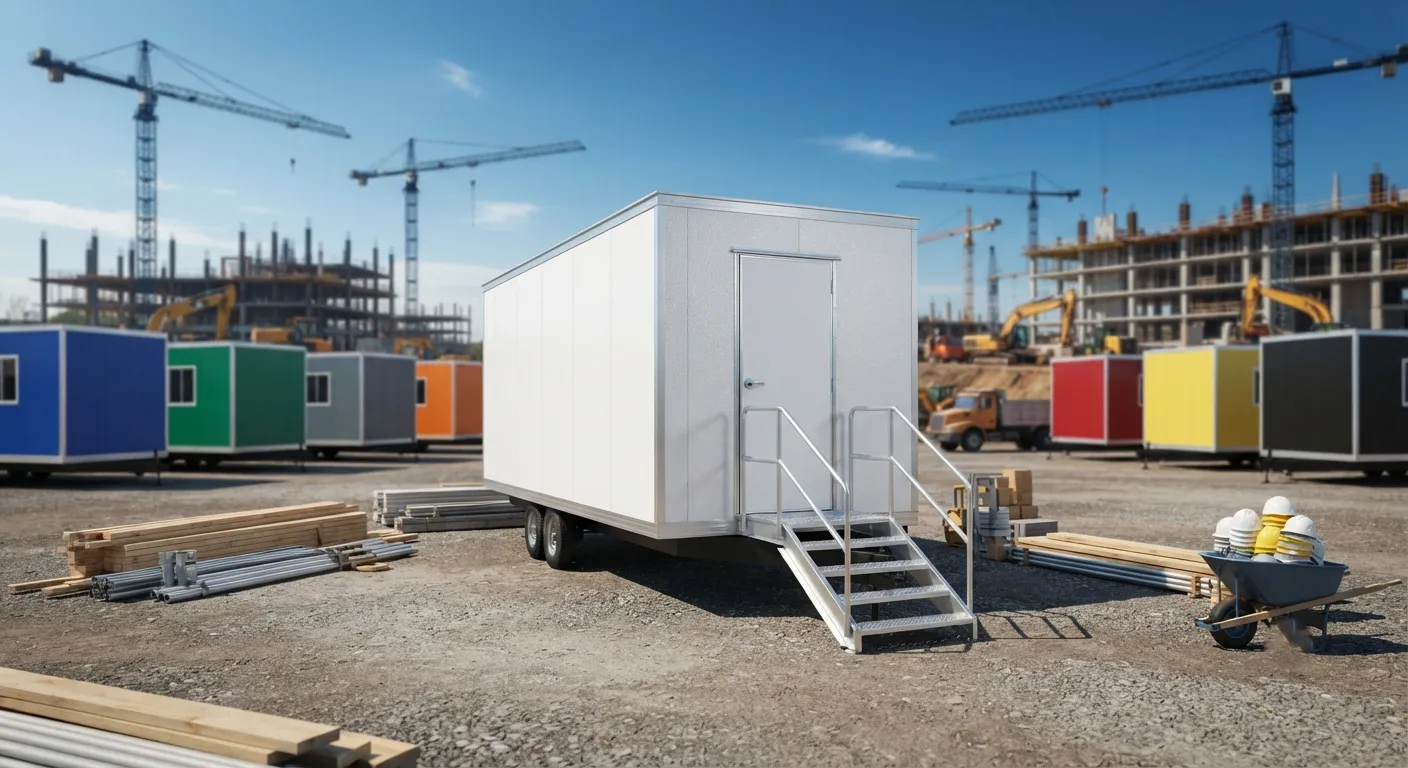
For fairs with a VIP tent, sponsor area, or bridal-adjacent hospitality space, a restroom trailer or a deluxe flushable porta potty gives organizers a nicer option without pulling budget from the general-admission units. Our 4 stall restroom trailer handles moderate VIP traffic; larger fairs sometimes step up to an 8 stall restroom trailer for grandstand-level crowds. If food vendors are on site, OSHA 1926.51(a)(1) calls for an adequate supply of potable water at any place of employment, which is why we pair vendor rows with a portable sink rental or extra hand sanitizer stations rather than relying on a single tap.
Fencing matters too. Temporary fencing keeps foot traffic away from generator cables and delivery lanes, and a temporary fence rental around the restroom clusters also stops units from becoming an informal shortcut through parking areas. If the grounds run a stage or lighting rig overnight, a light tower rental near the restroom bank helps evening visitors find their way after dark, and OSHA 1926.56(a) sets minimum illumination levels for active work and staging areas that our crews reference when we're also servicing vendor build-out.
Do Fair Restrooms Need Permits in Clifton?
Placement of restroom units in parking lots, roadways, or the public right of way needs confirming with the City of Clifton before delivery, since fairground layouts often spill onto municipal property or shared lots. We coordinate with your event organizer on where units and delivery trucks can sit, and we recommend confirming any right-of-way question early since fair permitting timelines are usually set weeks ahead. Our porta potty permit requirements page covers the general questions organizers ask before booking, and our porta potty placement guide covers ground clearance, slope, and delivery truck access, including the roughly 60 feet of straight clearance a delivery truck needs to unload safely. Grease from fair food vendors also needs proper handling; a grease trap pumping service is worth scheduling if vendors are frying on site for multiple days.
For fairs anywhere near Nutley, about 4.2 miles south of Clifton, or Garfield, 3.7 miles northeast, we run the same cluster-based layout and can service multiple fairground sites in a single route day. See our event restroom rental page for how we handle multi-day festival bookings generally, and our festival restroom rental page for crowd-specific placement advice.
How far in advance should I book restrooms for a county fair?
Book as soon as your dates and site plan are set, ideally four to six weeks out for a multi-day fair. Fair season pulls heavily on standard units and trailers across Clifton, and cluster layouts take more planning than a single-site delivery. Early booking also gives us time to confirm placement with the city.
Can I mix standard units and a restroom trailer at the same fair?
Yes, and it's common. General-admission areas get standard units in clusters, while VIP tents or sponsor areas get a trailer. This split keeps cost reasonable while giving premium areas a nicer option, and both types can be serviced on the same route.
How often are restrooms serviced during a multi-day fair?
ANSI/PSAI Z4.3 sets a baseline of one service visit per week for moderate use, but multi-day fairs with heavy foot traffic usually need daily servicing. We build the service schedule around expected daily attendance, not the calendar.
Do I need a handwashing station separate from the toilets?
Yes, especially near food vendors. 29 CFR 1910.141(d)(2) requires washing facilities stocked with soap and towels or a hand-drying device, and hand sanitizer alone doesn't meet that standard. We place stations at food row and at each restroom cluster.
What if the fair runs longer than expected and I need units picked up later?
Call us and we'll extend the rental. Our emergency porta potty rental line handles last-minute schedule changes, and extending an active fair rental is simpler than a new same-day order.
Next step
Get a delivery date
Tell us the address, the dates and the headcount. We size the order and confirm the route.