How many restrooms does a marathon or race need?
There is no single number stamped on every course. It depends on runner count, race length and how spread out your water stations are. A 5K with 300 runners needs less than a half marathon with 3,000. The rule of thumb organizers in event restroom rental planning use: cluster units at the start corral, at least one mid-course near mile 3 or 4, and a heavier bank at the finish where runners linger. For crowd sizing logic, how many porta potties do I need walks through the math by headcount rather than by industry, since OSHA 1926.51(c) tables apply to job sites, not spectator events, and won't tell you what a race needs. Under ADA Standards section 213.2, wherever you cluster standard units, at least 5 percent must be accessible, with a minimum of one no matter how small the cluster. That means even a start line with eight units needs one ADA accessible porta potty in the mix. Finish-line crowds also linger near food tents and merchandise tables, so add units there rather than assuming the start-line count covers the whole footprint. Clifton races that loop through residential streets should also budget for a unit near any turnaround point where runners bottleneck waiting for water or medical checks.
Where should restrooms be placed along a race route?
Restrooms belong at the start corral, one mid-course cluster, and a heavier bank at the finish, never more than a short walk from where runners actually stop moving. Placement along a race course is different from a static job site because runners are moving targets. The porta potty placement guide covers ground stability and clearance, both of which matter more on grass or park paths common to Clifton races than on paved lots. ADA Standards section 302.1 requires the ground under and around an accessible unit to be stable, firm and slip resistant, which rules out soft turf without matting. A standard unit runs about 44 by 48 inches on the ground and stands roughly 92 inches tall, so tuck units off the running lane but close enough that a walk-up doesn't cost a runner more than a minute. If your course finishes near a venue with existing plumbing, a restroom trailer rental at the finish line handles bigger crowds better than a row of standard units, especially for events pulling runners from Garfield, 3.7 miles northeast, or Nutley, 4.2 miles south. Races that also serve food at the finish should look at a handwashing station rental, since 29 CFR 1910.141(d)(2) requires soap and towels or a hand-drying device at wash stations, not sanitizer alone. If the route also needs event lighting for a pre-dawn start, a light tower rental alongside a temporary power pole covers both, and knowing how to brace a temporary power pole against wind and foot traffic matters as much as siting the restrooms themselves, since a pole that gets bumped by a water station crew mid-race is a bigger problem than a restroom line.
What does a race restroom rental cost in Clifton?
Race-day pricing depends on unit type, how many days you need them staged, and whether you want a trailer instead of standalone units. Below are the bands that apply to a typical Clifton race weekend.
| Unit | Day | Weekend | Week |
|---|---|---|---|
| Standard unit | $100-$350 | $125-$400 | $130-$500 |
| ADA unit | $200-$400 | $199-$300 | $240-$300 |
| Deluxe flushable | $85-$1,200 | - | $150-$290 |
| Restroom trailer | $175-$2,500 | $900-$3,000 | $1,650 |
Delivery typically runs separately, in the $100 to $500 range for a single day depending on distance and access. For full breakdowns by rental length, porta potty rental cost and porta potty rental per day go deeper on what drives the swing between low and high figures. Races that book months out sometimes bundle restrooms with barrier rentals; if your course needs to control spectator flow at the start or finish, a crowd control barrier rental or temporary fence rental can be quoted alongside restrooms in the same delivery. Courses that also cross county lines toward Montclair, 5.7 miles southwest, or Bloomfield, 5.9 miles south, should confirm delivery access early, since a roll-off or trailer delivery needs about 60 feet of straight clearance behind the truck, which isn't always available on narrow residential streets.
How far in advance should I book race restrooms?
Book as soon as your route and headcount are set, ideally 60 to 90 days out for a race pulling more than a thousand runners. Units and trailers get reserved fast during spring and fall race season. Use request a quote once you have a rough headcount.
Do I need an ADA unit even for a small local race?
Yes. ADA Standards section 213.2 requires at least one accessible unit in any cluster, regardless of cluster size. See ADA restroom requirements for door and clearance specs.
Can I get a restroom trailer instead of standard units?
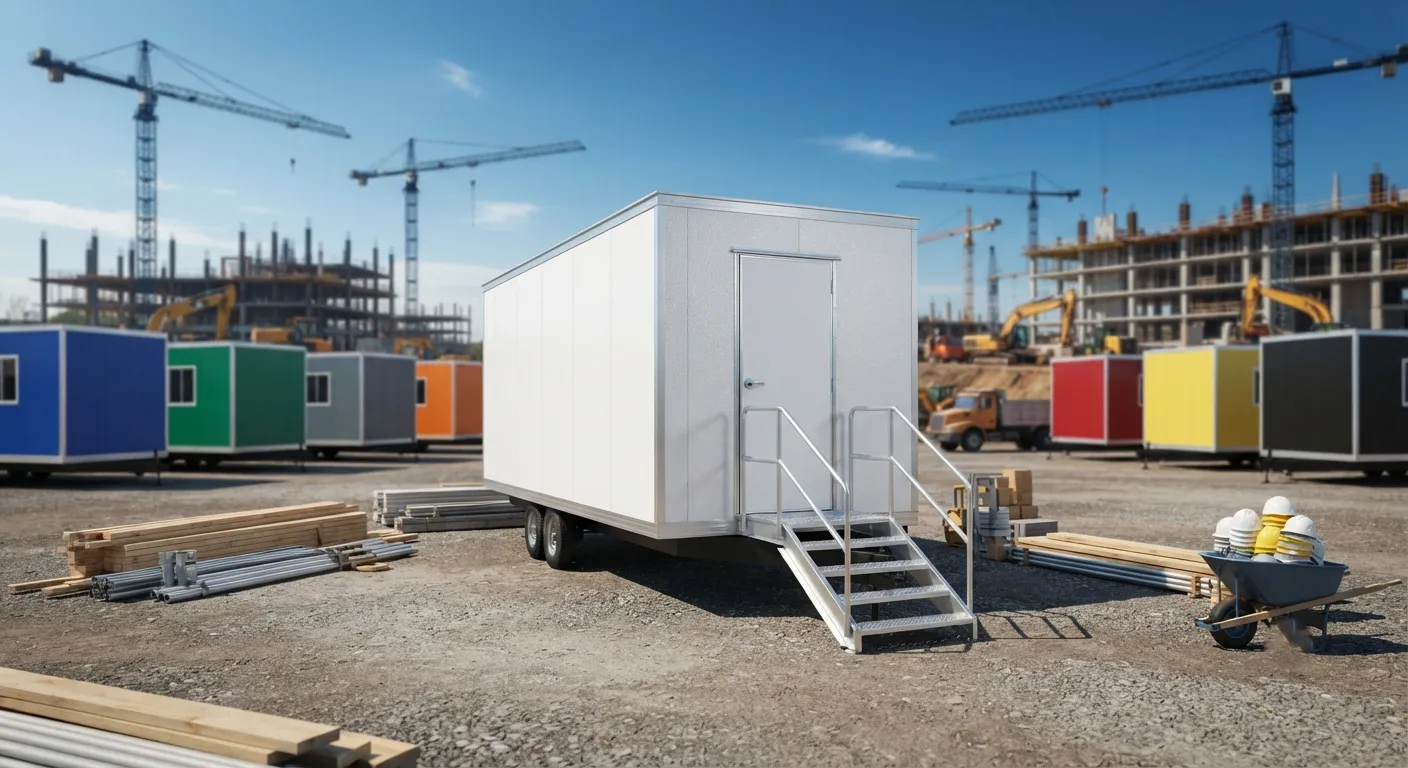
Yes, and many finish lines prefer it. A 4 stall restroom trailer or 8 stall restroom trailer handles finish-line crowds faster than a row of standalone units.
What if my race needs restrooms on short notice?
Clifton Porta Pros handles late bookings through emergency porta potty rental when a course change or permit delay compresses your timeline.
Do race restrooms get serviced mid-event?
For single-day races, units are serviced before delivery and picked up after. Multi-day events follow a service schedule; see how often are porta potties cleaned for interval details.
Next step
Get a delivery date
Tell us the address, the dates and the headcount. We size the order and confirm the route.