
How does a standard porta potty actually work?
There's no mystery to it. A standard porta potty rental is a self-contained box: a molded seat over a holding tank, a roof vent to pull odor up and out, and a door that locks from inside. The tank sits below the seat, about 60 to 70 gallons, and the blue liquid in it is a deodorizer and holding agent, not a cleaner in the way a toilet bowl chemical works at home. When a construction worker running to a porta potty on a job site steps in, uses it, and steps out, nothing flushes. Waste just sits in the tank until a service truck comes to pump it out. That's the whole loop. A standard unit stands about 92 inches tall and measures roughly 44 by 48 inches on the ground, which matters when you're figuring out where it fits on a tight lot. For crews wondering how many units a job actually needs, our guide on porta potty counts walks through it, and OSHA 1926.51(c) sets the baseline: one toilet for every 20 workers on a standard construction crew of 20 or fewer, scaling up from there. If you're renting for a house flip or addition, the home renovation porta potty page covers smaller setups.
How do flushable and deluxe porta potties work?
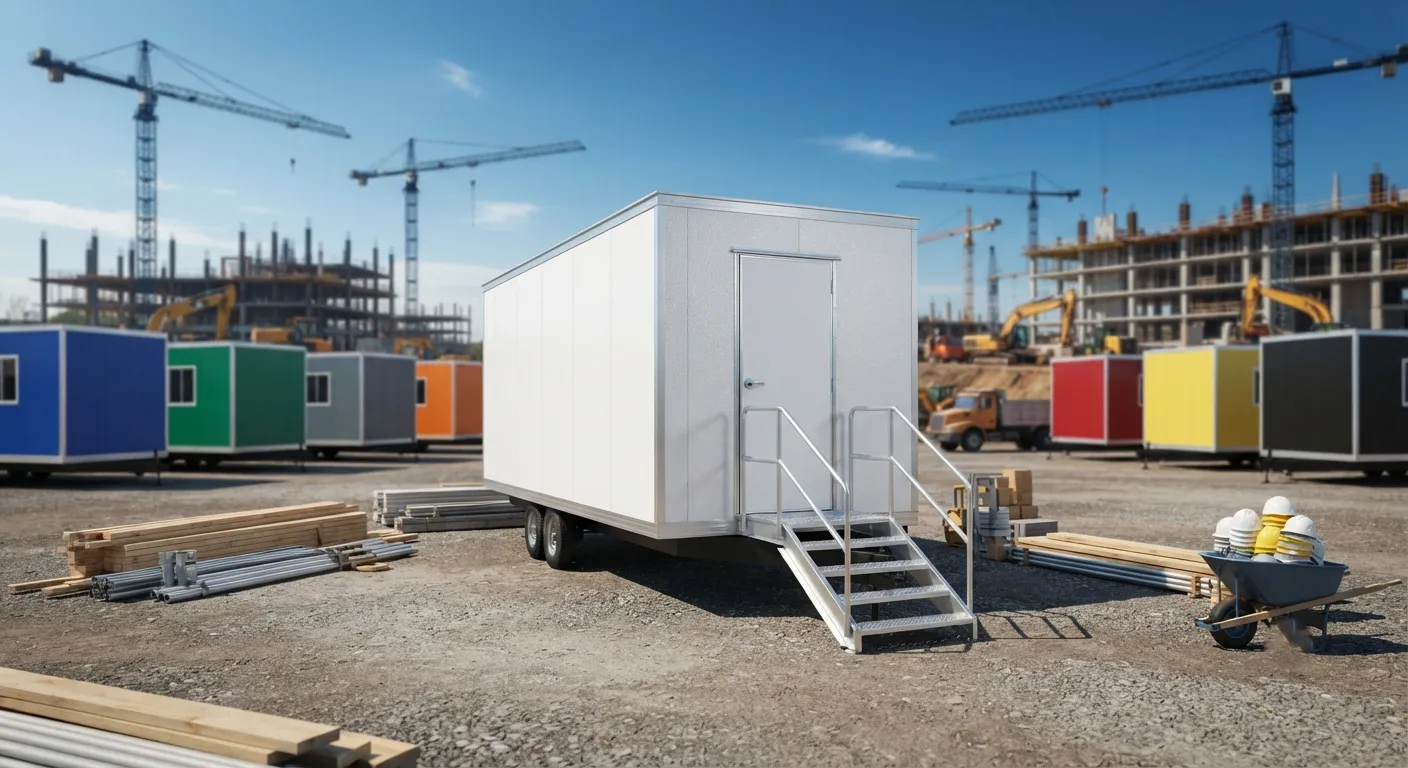
They work the same way at the core, holding tank and all, but a deluxe flushable porta potty adds a foot pump or hand pump that pulls fresh water from a separate onboard tank to rinse the bowl after each use. That's the difference between a basic box and something closer to a real bathroom. Deluxe units still store waste in a holding tank below, just like a standard unit, they just don't rely purely on chemical treatment to manage odor between services. These get requested a lot for weddings and backyard parties where guests expect more than a job site setup. If you're planning something nicer, look at restroom trailer rental options too, since a 2 stall restroom trailer or 4 stall restroom trailer runs flush toilets connected to a real freshwater and holding system, closer to what people expect at a wedding restroom rental or upscale event. For camping trips, the same flush mechanics apply on a smaller scale, and a camping porta potty works fine for a weekend without hookups.
What chemicals go inside a porta potty?
The blue liquid inside every tank is a deodorizing and waste-breakdown chemical, and it's what keeps a unit usable between services. It's not the same thing as septic tank cleaning chemicals used to treat a home system, those are formulated for a completely different tank environment and a different bacterial balance. Porta potty chemical does two jobs: it masks odor and it helps liquefy solid waste so pumping goes faster and cleaner. Clifton Porta Pros restocks this with every service visit, following the ANSI/PSAI Z4.3 standard baseline of one service per week for up to 10 users over a 40 hour week, though busy sites in Clifton often need more frequent visits. If you're curious how the service side works day to day, our page on cleaning frequency breaks down what a normal rotation looks like, and the do porta potties smell page addresses the odor question directly, since that's what most people actually worry about.

How does a portable sink work with a porta potty setup?
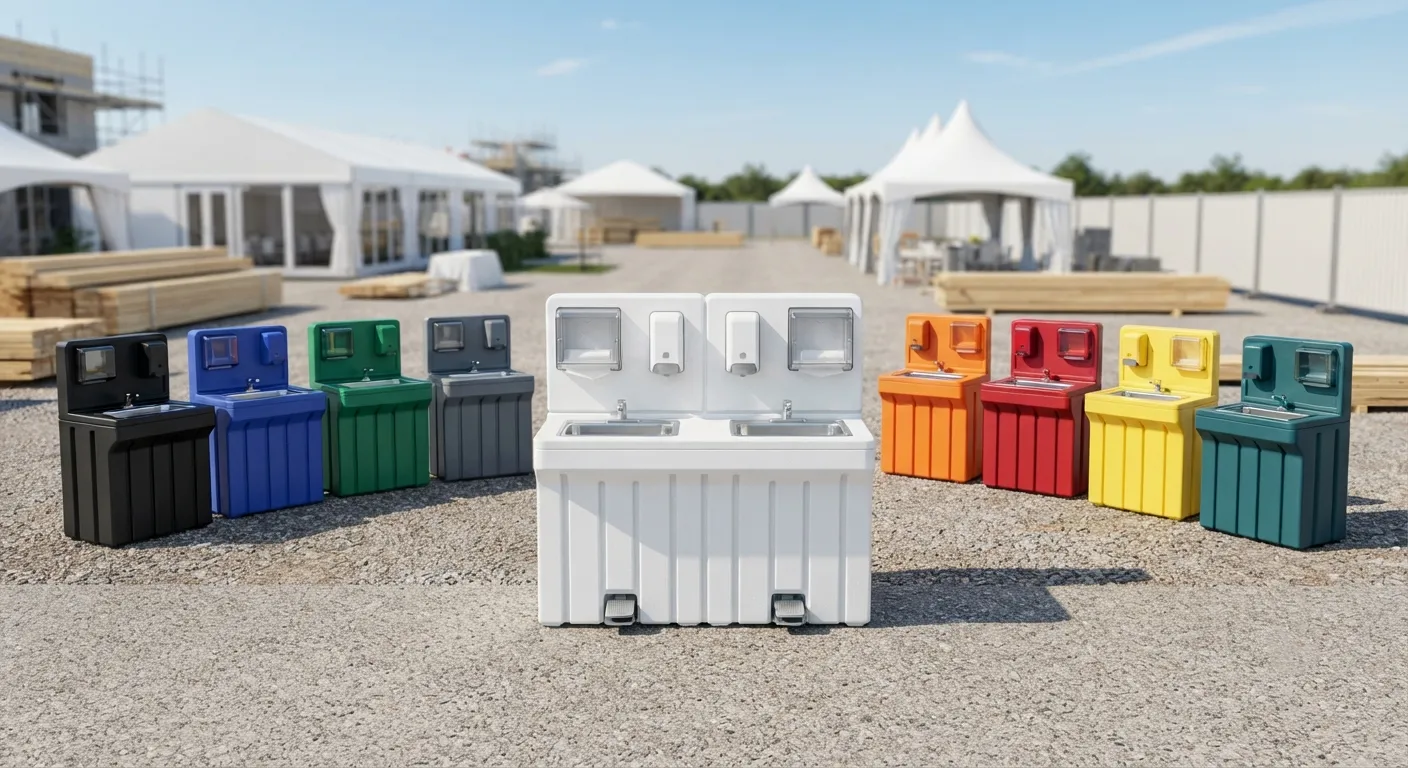
A portable sink rental or handwashing station rental pairs with porta potties because OSHA 1926.51(c) toilet requirements often come with a separate expectation for handwashing, and 29 CFR 1910.141(d)(2) is clear that soap and towels or a hand-drying device have to be provided, hand sanitizer alone doesn't satisfy it. A portable sink works off a foot pump or hand pump, drawing from an onboard freshwater tank and draining into a separate gray water tank underneath. No hose bib, no drain line, it's fully self-contained like the toilets next to it. On sites where crews are applying paints, coatings, herbicides or insecticides, OSHA 1926.51(f)(1) requires washing facilities specifically because of those contaminants, so a sink isn't optional there. For general potable water access, OSHA 1926.51(a)(1) requires an adequate supply on every job site regardless. Garfield sits 3.7 miles northeast of Clifton and Nutley is 4.2 miles south, and we service both with the same sink and toilet combos we run across Clifton job sites.
Rental durations and what's typical
| Unit | Day | Week | Month |
|---|---|---|---|
| Standard | $100-$350 | $130-$500 | $125-$325 |
| Deluxe flushable | $85-$1,200 | $150-$290 | - |
| ADA accessible | $200-$400 | - | - |
Pricing depends heavily on how long you need the unit and what kind of event or job it's for. Our porta potty rental cost page has the full breakdown, and if you're comparing day rates specifically, porta potty rental per day covers that in more detail. Long jobs usually make more sense on a monthly porta potty rental plan.
Do porta potties need to be pumped even if flushable?
Yes. Flushable units still store waste in an onboard holding tank, they just rinse the bowl with fresh water first. Every unit, standard or deluxe, gets pumped on a service schedule. A deluxe tank fills faster because of the added rinse water, so it may need more frequent pumping than a standard unit on the same job.
Are porta potties ADA accessible?
Some are. An ADA accessible porta potty has a wider door and interior turning space, built to ADA Standards 404.2.3 for a 32 inch clear door opening and ADA Standards 304.3.1 for a 60 inch turning circle. ADA Standards 213.2 requires at least 5 percent of clustered units be accessible.
How often does a porta potty get serviced?
Weekly is the baseline under ANSI/PSAI Z4.3 for up to 10 users over a 40 hour week. Busy construction sites or multi-day events in Clifton often need two or three visits weekly. Check how often porta potties are cleaned for specifics on scheduling around your site's traffic.
Can I place a porta potty on the street in Clifton?
Placement in the public right of way needs confirming with the city before delivery. We check this with you during quoting rather than guessing, since rules vary by street and property line. See our porta potty placement guide for setup basics you can control regardless of location.
What's the difference between a porta potty and a restroom trailer?
A porta potty is self-contained with a holding tank and no running water beyond a deluxe unit's rinse feature. A restroom trailer runs full plumbing, sinks, and sometimes climate control, closer to a real bathroom. Trailers cost more but suit weddings, corporate events, and multi-day festivals better than standard units.
Next step
Get a delivery date
Tell us the address, the dates and the headcount. We size the order and confirm the route.